
No products in the cart.
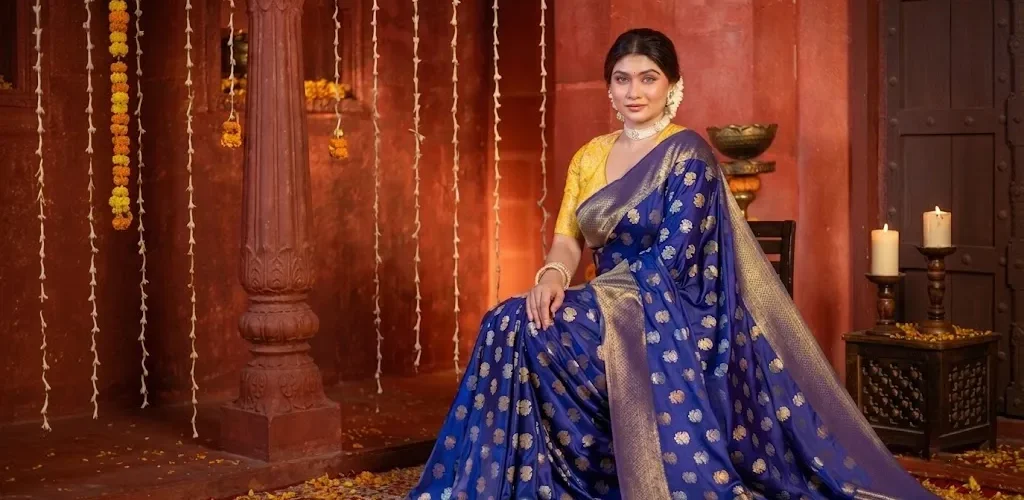
What is the Difference Between Kosa Silk and Tussar Silk Sarees?
Kosa and Tussar silk sarees may look similar at first glance, but each carries the story of a region’s weaving traditions, craftsmanship, and cultural identity. While Kosa is often considered a form of Tussar silk, especially in Chhattisgarh, the unique textures, natural sheen, weaving styles, and artistic details give these sarees their own distinct charm.
From the earthy elegance of Chhattisgarh Kosa silk to the handcrafted beauty of Bhagalpur Tussar, these sarees represent generations of Indian textile artistry. Knowing what makes them different can help you choose a saree that suits your occasion and celebrates the heritage behind every weave.
Are Kosa Silk and Tussar Silk the Same Thing?
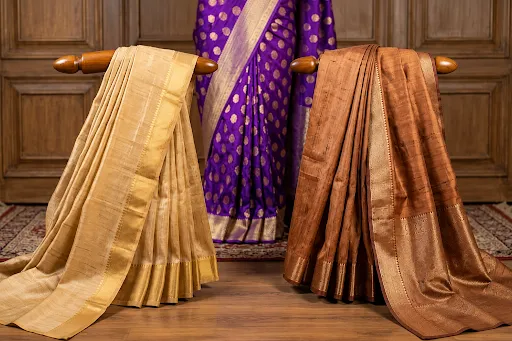
Yes, in most Indian textile contexts, Kosa silk and Tussar silk refer to the same broad family of wild silk. “Kosa” is the traditional regional name widely used for Tussar silk in Central India, especially Chhattisgarh. Therefore, the difference is often regional.
The phrase “regional names for tussar silk” helps explain why shoppers see different labels for closely related fabrics. However, a saree’s region, yarn preparation, weaving technique, finish, and design can still create visible differences.
Where the Name Confusion Comes From
Wild Silk Sarees India — One Family, Many Regional Names
Wild silk is produced from silkworms that feed on naturally occurring host trees. India has several traditions of wild silk production. Tussar is one of the best-known varieties.
Bhagalpur is an important centre for Tussar production. The region highlights traditional manual processing, local reeling, and handloom weaving.
Antheraea Silkworm Silk — The Common Origin
Indian tropical Tussar commonly comes from the Antheraea mylitta silkworm. Its wild habitat and feeding conditions influence the character of the silk.
Tussar silk is harvested from wild silkworms. It also explains that the silk can occur naturally in cream, copperish, golden-brown, and related shades.
Unlike highly uniform industrial fibres, wild silk can show natural variation. The resulting yarn may have subtle irregularities. These contribute to the distinctive texture that shoppers associate with Tussar and Kosa sarees.
Regional Variations Worth Knowing
Chhattisgarh Kosa Silk Saree
A Chhattisgarh Kosa silk saree is strongly associated with the state’s traditional handloom culture. Tussar sarees from Raigarh use Tussar silk and Desi Tussar, or Kosa, yarn. Some traditional examples use plain weaves, Jala techniques, temple borders, and zari details.
Bhagalpur Tussar Silk Saree
A Bhagalpur Tussar silk saree comes from one of India’s major silk-weaving centres. Bhagalpur is often described as a nucleus of the natural silk industry.
Bhagalpur Tussar is known for its rustic texture, natural lustre, and manual production. Traditional finishing may include Kundi finishing or calendaring.
What Actually Varies — Texture, Sheen, and Weave
The real difference between two Kosa or Tussar sarees often lies in construction rather than the name.
| Feature | Kosa Silk | Tussar Silk |
| Common reference | Regional name for Tussar | Broad silk category |
| Fibre family | Wild silk | Wild silk |
| Typical feel | Textured and slightly crisp | Textured, crisp, or soft |
| Natural colour | Beige, cream, copper, golden-brown | Similar natural shades |
| Surface | Rustic to refined | Rustic to refined |
| Weaving | Depends on regional tradition | Depends on regional tradition |
A natural golden silk saree gets much of its visual appeal from the fibre’s inherent colour and surface reflection. It does not need an intensely glossy finish to look luxurious.
The weave also changes how light behaves on the saree. A tightly finished surface may look brighter. A more textured handwoven surface may show softer, uneven highlights.
How to Identify Authentic Handwoven Wild Silk Sarees
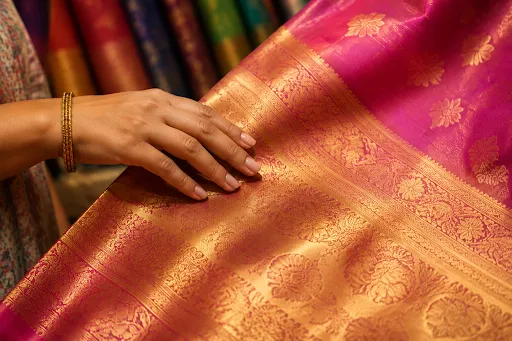
A handwoven wild silk saree should be evaluated through several signs rather than one quick test.
- Look for small, natural variations in yarn thickness
- Examine the weave closely for human-made irregularities
- Check whether the border and pallu show detailed handloom work
- Ask about the silk type, weaving region, and artisan source
- Look for reliable handloom or product certification where available
- Compare the fabric’s texture with the seller’s stated fibre and weave
These signs are indicators, not absolute laboratory tests. The place of origin and seller transparency matter.
Handloom products are distinguished by their state of origin, district, weaver, weave, and technique. Such documentation can help buyers understand regional craft traditions.
Which One Should You Choose?
Choose based on the look, feel, and purpose you prefer-
When you want Kosa:
- A strong Central Indian textile identity
- A naturally textured handloom appearance
- Earthy, understated colours
- Traditional Chhattisgarh-inspired designs
When you want Tussar:
- A wider range of regional styles
- Bhagalpur and other established weaving traditions
- Natural texture with versatile styling
- Sarees ranging from simple everyday designs to elaborate festive pieces
The label alone should not decide quality. That is why buyers should compare construction and place of origin, not labels alone, when judging a silk saree’s authenticity, value, and suitability for their wardrobe.
Where to Find Genuine Kosa and Tussar Sarees in Kolkata
If you are looking for a Kosa silk saree for festivals, work, or celebrations, focus on the key factors. Ask whether the saree is handwoven, where it was woven, and what type of silk yarn it uses.
At our store, shoppers can explore traditional Indian sarees and compare different textile characteristics before choosing. The collection includes Kosa sarees, while its traditional saree range highlights India’s regional weaving heritage. This makes it easier to compare textures, colours, borders, and regional styles before selecting a saree for your wardrobe or a special occasion.
One Silk Family, Many Beautiful Names
Kosa and Tussar are best understood as closely connected names within India’s wild silk tradition. Kosa is widely used as a regional name for Tussar, especially in Central India. Yet regional weaving traditions give each saree its own identity.
The most meaningful difference is often not the label. It is the yarn, weave, finishing, craftsmanship, and place of production.
Whether you prefer a Chhattisgarh Kosa silk saree or a Bhagalpur Tussar silk saree, look beyond the name. Learn the story behind the fabric. Choose authentic craftsmanship. That is what gives a handwoven saree lasting value.
Visit our store to explore our collection of Tussar and Kosa silk sarees in Kolkata today.
Frequently Asked Questions
- If Kosa and Tussar are the same silk, why do shops list them as separate categories?
Retailers often use regional names to describe distinct weaving traditions. “Kosa” may signal a Central Indian or Chhattisgarh association, while “Tussar” can be used more broadly.
- Does the region a wild silk saree comes from affect its quality or price?
Yes. Region can affect yarn preparation, weaving technique, design, finishing, and craftsmanship. Price also depends on handwork, zari, and the detailing.
- How can you tell if a Kosa/Tussar saree is genuinely handwoven and not machine-made?
Inspect the weave, ask for product details, and verify the seller’s claims. Handloom irregularities can help, but certification offers stronger evidence.
- Is Kosa silk suitable for everyday wear, or only special occasions?
A Kosa silk saree can work for everyday wear when the saree has a lighter weave and simpler design. Richer borders and detailed pallus suit festive occasions.
- Why does Tussar/Kosa silk have that distinctive golden sheen?
Its natural fibre colour and textured surface reflect light differently from highly uniform silk. Natural shades can include cream, copperish, and golden-brown tones.