
No products in the cart.
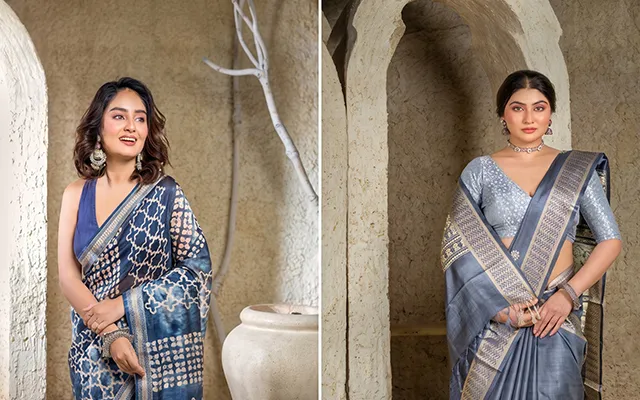
Short Height or Tall Frame? Find the Saree Draping Style That Suits You Best
A saree is more than just a piece of fabric—it is a way to create your own style and highlight your natural features. How you drape a saree can change the overall look, adding height, defining curves, or creating a balanced silhouette. Whether you have a petite frame or a tall figure, the right pleats, pallu style, blouse design, and waist placement can make a saree look even more flattering.
Since a saree is an unstitched garment, it offers endless styling possibilities. From traditional regional drapes to modern adaptations, small changes in how you wear it can completely transform the outfit’s look and feel.
Why Draping Style Matters More Than the Saree Itself
The same saree can look compact, elongated, structured, or fluid depending on how you wear it. A clean, narrow pleat can create a longer vertical line. A pallu placed too low can shorten the torso visually, while a neatly positioned pallu can improve proportion.
| Styling element | Petite frame | Taller frame |
| Pleats | Narrow and neat | Medium or wider |
| Pallu | Controlled length | Longer or fuller |
| Border | Slim to medium | Medium to broad |
| Blouse | Defined waistline | Balanced length |
| Footwear | Slight lift if desired | Any comfortable height |
Saree Draping Tips for Short Height Women
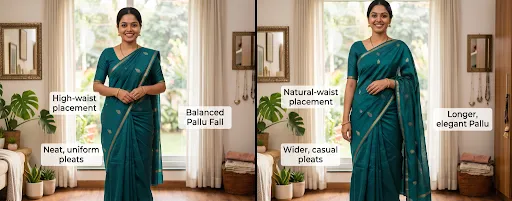
The best approach is to keep the lower half visually clean. Excess fabric around the ankles can make the frame appear shorter. Keep pleats even, secure the waist firmly, and avoid allowing the pallu to overwhelm the shoulder.
Best Saree Pleats for Petite Body
The best saree pleats for petite body proportions are usually narrow, even, and vertically aligned. Around five to seven front pleats can create a tidy column, depending on fabric and comfort. Avoid excessively wide folds that spread across the abdomen.
How to Look Taller in a Saree
If you wonder how to look taller in a saree, start with uninterrupted vertical lines. Wear the saree slightly higher at the waist, while keeping the hem close to the floor. Choose a pallu that falls neatly instead of spreading heavily.
Useful choices include:
- Narrow front pleats with consistent spacing
- A blouse ending near the natural waist
- Similar tones between blouse and saree
- Minimal horizontal detailing around the waist
- Comfortable footwear with subtle elevation
Saree Length for Petite Women — Getting the Fall Right
Saree length for petite women should support a secure drape without creating unnecessary bulk. Sarees commonly range around five to six yards, although regional and ceremonial styles vary. Rather than altering a saree solely because of height, check the finished fall, waist wrap, pleat depth, and pallu length.
Saree Styling for Tall Women
Saree styling for tall women often works best when proportion is intentionally balanced. However, excessive length in every element can create a stretched silhouette.
Balancing Proportion When You Have Height to Work With
Tall frames can carry stronger horizontal details. Medium or broad borders can provide visual weight near the hem. Printed sarees with larger motifs can also work well.
Pleat and Pallu Adjustments for Taller Frames
Taller women can experiment with slightly broader pleats. A fuller pallu can also add volume around the upper body. Keep the pallu long enough for a graceful fall, but secure it so it does not drag or distort the shoulder line.
Saree Draping Styles for Different Body Types
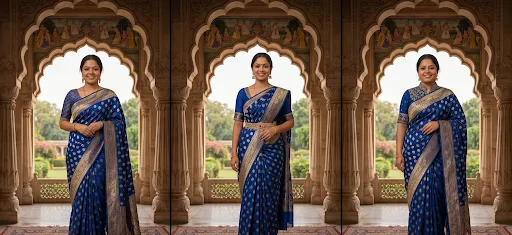
A curvier frame looks best with supportive pleats and a secure pallu. A straighter frame complements softer fabrics and layered textures. Petite women may prefer cleaner vertical lines, while tall women can explore broader details.
| Preference | Draping approach |
| Defined waist | Higher, secure waist drape |
| Fuller lower body | Smooth pleats and controlled volume |
| Fuller upper body | Comfortable pallu placement |
| Straight silhouette | Texture or statement blouse |
| Petite frame | Narrow pleats and lighter detailing |
| Tall frame | Broader borders and fuller pallu |
Traditional Saree Drape vs. Modern Drape
The traditional saree drape vs modern drape debate is about styling priorities. Traditional drapes preserve regional identity and established techniques. Modern drapes may use pre-pleating, belts, pinned pallus, structured blouses, or experimental silhouettes.
Neither approach is universally better. The right choice depends on the occasion, saree, and desired appearance.
Draping Tricks to Elongate the Body
Simple draping tricks to elongate the body can make the silhouette appear cleaner without changing natural proportions.
- Keep front pleats straight and evenly spaced
- Position the waist consistently rather than too low
- Let the hem meet the floor cleanly
- Keep the pallu controlled and vertically falling
- Avoid excessive bunching around the waist
- Use footwear before finalising saree length
- Repeat vertical lines through jewellery or blouse detailing
Saree Blouse Tips for Short Height
Short-height women often focus on creating a defined upper-body shape. A well-fitted blouse can prevent the saree from looking bulky. Consider a blouse that ends near the natural waist. Avoid excessive fabric around the shoulders if your goal is a streamlined look.
Which Saree Fabrics Drape Best for Your Height
Fabric changes how much volume a saree creates. Soft cotton, lightweight silk, georgette, and chiffon can form cleaner folds.
| Fabric character | Visual effect | Useful for |
| Lightweight and fluid | Soft, vertical fall | Streamlined looks |
| Medium-weight | Defined structure | Versatile styling |
| Crisp and structured | Fuller silhouette | Traditional looks |
| Heavy embellished | Added visual weight | Grand occasions |
Getting It Right — Book a Styling Session or Visit Us
Finding the right drape becomes easier when you can see the saree on your own frame. At our showroom, we can help you compare fabrics, borders, pleat arrangements, blouse proportions, and pallu placements based on your preferred look.
If you are looking for a saree styling guide in Kolkata to make your next choice easier, explore our curated collection and connect with our team for personalised guidance.
The Right Drape Makes Any Height Work
Height can guide styling decisions, but it should never limit your choices. Small adjustments can make the overall look balanced. The most flattering saree fits well, moves comfortably, and reflects your personality. With the right draping technique, every woman can carry a saree with confidence and grace.
If you live in Gariahat and are looking for the best saree shop, visit our showroom to check out our versatile collection.
Frequently Asked Questions
- Does saree length change based on height, or is one size truly universal?
Sarees come in different lengths, and regional styles may vary. Height alone does not determine the ideal length.
- What’s the biggest draping mistake petite women make with sarees?
The most common issue is excess fabric. Very wide pleats, a low waist, or an oversized pallu can create visual bulk.
- Can tall women wear any saree style, or are some cuts better suited to height?
Tall women can explore many saree styles. Broad borders, fuller pallus, larger motifs, and varied blouse lengths can work beautifully.
- Do pleat width and pallu length really affect how tall or short you look?
Yes. Pleat width changes horizontal visual space, while pallu length and placement influence the upper-body silhouette.
- Are certain fabrics easier to drape well for beginners regardless of height?
Lightweight to medium-weight fabrics are often easier to manage. They generally form controlled pleats without excessive stiffness or bulk.