
Chanderi sarees have remained a symbol of Indian weaving heritage for centuries, known for their delicate texture, lightweight feel, and elegant transparency. However, with many machine-made and blended alternatives available today, identifying an authentic chanderi cotton saree can be challenging for buyers.
This chanderi saree fabric guide will help you understand the important checks before purchasing — from fabric quality and motifs to zari work, GI certification, pricing, and seller transparency. Whether you are buying from a store or learning how to buy chanderi saree online, these 10 simple tests can help you recognise genuine craftsmanship.
What Makes a Chanderi Cotton Saree Different From Other Sarees?
Chanderi sarees originate from Chanderi town in Ashoknagar district of Madhya Pradesh, a region known for its centuries-old handloom tradition. Historically, Chanderi weavers developed a unique weaving style by combining silk and cotton yarns to create fabrics that were lightweight yet luxurious.
The main difference between Chanderi silk and Chanderi cotton lies in their yarn composition. Chanderi cotton sarees use predominantly cotton threads, giving them a soft, breathable feel suitable for everyday elegance. Chanderi silk sarees contain more silk yarn, offering a richer shine and smoother texture.
Unlike heavy traditional sarees, Chanderi is recognised for its:
- Sheer texture and graceful fall
- Lightweight construction
- Handwoven motifs
- Fine zari detailing
- Comfortable wearability
The authenticity of Chanderi matters because genuine handwoven sarees preserve traditional weaving skills and support artisan communities.
To explore more traditional handloom craftsmanship, you can explore our full range of handloom sarees.
Related handwoven fabrics like Kosa and Tussar silk also represent India's rich weaving heritage. You can see our Kosa and Tussar silk sarees for similar luxury handloom options.
1. Does the Fabric Have That Signature Sheer, Transparent Look?
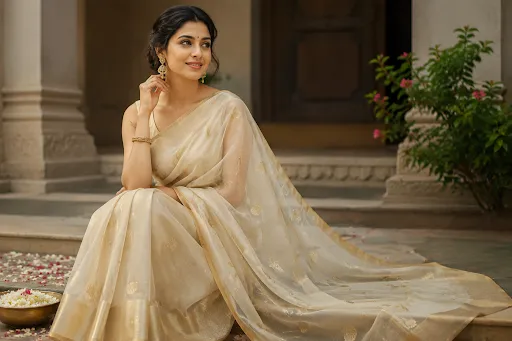
The easiest answer to how to check a pure Chanderi saree is to examine its transparency. Authentic Chanderi fabric has a naturally lightweight and slightly translucent appearance because of its fine yarn structure.
However, the fabric should not look weak or fragile. Genuine Chanderi maintains a balance between delicacy and strength.
How to Test — Hold It Against Light
Take the saree near a natural light source and observe:
- Genuine Chanderi allows light to pass through softly.
- The weave pattern should remain visible.
- The fabric should have a subtle glow rather than a plastic-like shine.
A completely opaque or excessively glossy fabric may indicate synthetic material or a power-loom imitation.
2. Is the Saree Lightweight and Airy, or Heavy and Stiff?
One of the biggest characteristics of an authentic Chanderi cotton saree is its feather-light feel.
A genuine Chanderi saree usually:
- Feels comfortable even after wearing for long hours
- Falls naturally around the body
- Does not feel bulky despite having intricate designs
- Allows air circulation, making it suitable for warmer climates
A saree that feels unusually stiff, thick, or heavy may contain synthetic fibres or excessive finishing chemicals.
3. Are the Motifs Woven In or Printed On?
When checking Chanderi saree real vs fake, the motifs are one of the biggest indicators of authenticity.
Traditional Chanderi designs are created through weaving techniques where patterns become part of the fabric structure instead of simply being printed on the surface.
Common Chanderi motifs include:
- Butis (small decorative motifs)
- Peacocks
- Flowers
- Geometric patterns
- Traditional coin and nature-inspired designs
The “Flip It Over” Test to Spot Woven vs Printed Patterns
Turn the saree inside out and examine the reverse side.
Authentic woven motifs:
- Design threads are visible on both sides
- Pattern feels integrated into the fabric
- Slight irregularities may appear
Printed designs:
- Pattern appears mainly on the surface
- Back side looks plain
- Colours may bleed slightly
4. Can You Feel Raised Threadwork When You Run Your Fingers Over the Design?
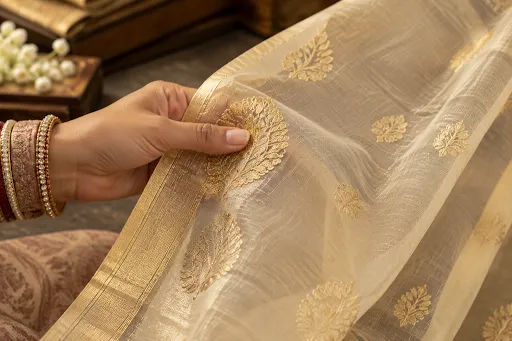
Handwoven Chanderi sarees often have slight texture variations because motifs are created using additional threads during weaving.
Run your fingers gently across the motifs.
A genuine saree may show:
- Slightly raised woven areas
- Texture changes around motifs
- Fine thread detailing
Perfectly flat designs may indicate digital printing or machine production.
5. Does the Weave Have Slight Irregularities Instead of Machine-Perfect Symmetry?
Handloom sarees carry the uniqueness of human craftsmanship.
Small variations such as:
- Minor differences in motif spacing
- Slight unevenness in weave
- Natural thread variations
are not defects — they are signs of handmade production.
Power-loom sarees usually have extremely uniform patterns because they are produced mechanically.
6. Is the Zari Muted Gold or Suspiciously Shiny?
Traditional Chanderi sarees often feature zari work that adds elegance without appearing overly flashy.
Authentic zari usually has:
- A soft golden appearance
- Fine thread integration
- Balanced shine
Be cautious if:
- Zari looks extremely bright yellow
- The metallic finish appears plastic-like
- Threads feel rough or artificial
Excessively shiny zari is often found in cheaper imitations.
7. Does the Saree Have a Chanderi Saree GI Tag?
The Chanderi saree GI tag is an important authenticity marker that protects the identity of this traditional craft.
A Geographical Indication (GI) tag confirms that a product originates from a specific region and carries unique characteristics associated with that location.
Why the GI Tag Matters and Where to Find It
A GI-related certification helps buyers identify products connected with genuine Chanderi weaving traditions.
Before buying, check:
- Product labels
- Seller documentation
- Weaver details
- Authenticity certificates (if provided)
The GI registration for Chanderi sarees recognises their connection with Chanderi, Madhya Pradesh, and protects the traditional craft from misuse.
8. Does the Price Match What a Handwoven Saree Should Cost?
The original Chanderi saree price depends on factors such as:
- Yarn quality
- Handloom complexity
- Motif design
- Zari work
- Weaver skill
- Production time
A genuine handwoven Chanderi cotton saree generally costs more than machine-made alternatives because of the craftsmanship involved.
Typical Price Range for Authentic Chanderi Cotton Sarees
| Type | Approximate Price Range |
| Simple Chanderi cotton sarees | ₹3,000 – ₹8,000 |
| Detailed motif handwoven sarees | ₹8,000 – ₹15,000 |
| Premium designs with extensive zari work | ₹15,000+ |
Prices may vary depending on craftsmanship, brand, and sourcing.
A saree advertised as “pure Chanderi” at an unusually low price should be examined carefully.
You can shop our handwoven Chanderi saree collection to explore authentic designs.
9. Can a Burn Test Confirm the Yarn Composition?
A burn test can sometimes indicate whether fibres are natural or synthetic, but it should be performed carefully.
Important: Never burn the saree itself. Only test a loose thread from an unwanted edge if absolutely necessary.
What to Expect From Natural vs Synthetic Fibres
| Fibre Type | Burning Behaviour |
| Cotton | Burns like paper and leaves soft ash |
| Silk | Burns slowly with a smell similar to burnt hair |
| Synthetic fibres | Melt and may form hard beads |
However, because Chanderi sarees often contain blended yarns, professional fibre testing is more reliable.
10. Is the Seller Transparent About Weaver Details and Sourcing?
A trustworthy seller should be able to explain:
- Where the saree was woven
- Whether it is handloom or power-loom
- Fabric composition
- Weaver or artisan details
- Care instructions
Transparency is one of the strongest indicators of authenticity.
Before purchasing, avoid sellers who:
- Cannot explain fabric details
- Use only generic product descriptions
- Avoid mentioning weaving origin
A genuine handloom seller usually takes pride in sharing the story behind the saree.
Quick Checklist — Original vs Fake Chanderi Saree at a Glance
Understanding real Chanderi saree vs fake becomes easier when you compare the key features.
| Feature | Authentic Chanderi | Fake/Power-Loom Chanderi |
| Fabric feel | Lightweight and airy | Heavy or stiff |
| Transparency | Soft sheer appearance | Excessively transparent or opaque |
| Motifs | Woven into fabric | Printed on surface |
| Texture | Slight handmade variations | Perfect machine uniformity |
| Zari | Subtle golden finish | Very shiny artificial look |
| Price | Reflects craftsmanship | Unusually cheap |
| Source | Weaver details available | Limited information |
These Chanderi saree identification tips can help you make a more informed purchase.
Buying a Chanderi Saree You Can Trust
Knowing how to buy Chanderi saree online becomes easier when you understand the signs of authentic craftsmanship. A genuine Chanderi cotton saree is not just a piece of clothing — it represents generations of weaving knowledge, artisan skill, and regional heritage.
Always check the fabric, motifs, zari, certification, pricing, and seller transparency before purchasing. Choosing sarees sourced through trusted handloom networks and recognised channels ensures better quality and supports traditional weavers.
Contact us or visit our Gariahat store to explore the collection of Chanderi sarees in Kolkata. Experience their authentic texture, weave, and craftsmanship firsthand.
People Also Ask
What is the difference between Chanderi silk and Chanderi cotton sarees?
Chanderi cotton sarees use cotton yarns, making them softer, breathable, and comfortable for regular wear. Chanderi silk sarees contain more silk fibres, giving them a smoother texture and richer shine. Both are lightweight but differ in feel, appearance, and price.
How much does an original Chanderi saree cost?
An original handwoven Chanderi saree usually starts from around ₹3,000 and can go beyond ₹15,000 depending on design complexity, fabric quality, zari work, and artisan craftsmanship.
Is Chanderi saree suitable for daily wear?
Yes, Chanderi cotton sarees are suitable for daily wear because they are lightweight, breathable, and comfortable. Simpler designs are ideal for office wear, casual outings, and daytime events.
How do you take care of a Chanderi cotton saree?
Store Chanderi sarees in a clean cotton cloth, avoid direct sunlight exposure, and refold them occasionally to prevent permanent creases. Dry cleaning is generally recommended for maintaining zari and fabric quality.
What is a GI tag and why does Chanderi saree have one?
A GI tag identifies products associated with a specific geographical region and traditional craftsmanship. Chanderi sarees received GI recognition because of their unique weaving heritage from Chanderi, Madhya Pradesh.
How do you know if a Chanderi saree is handloom or power loom?
Check for slight weave variations, woven motifs, seller transparency, and handloom certification details. Handloom sarees often have small natural irregularities that make every piece unique.
Is Chanderi saree the same as Maheshwari saree?
No. Both originate from Madhya Pradesh but have different weaving traditions. Chanderi is known for its sheer, lightweight texture, while Maheshwari sarees are recognised for their distinctive borders and striped patterns.