
No products in the cart.
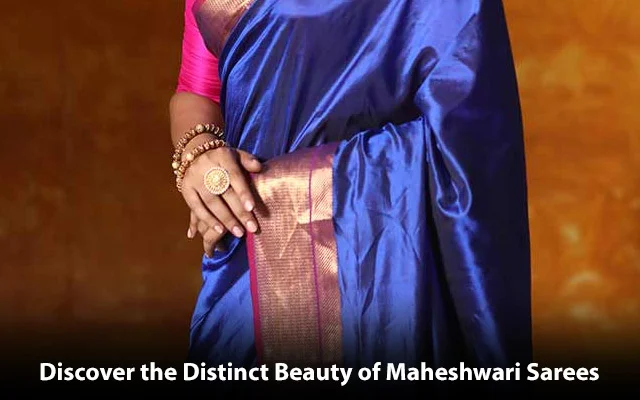
Discover the Distinct Beauty of Maheshwari Sarees
When it comes to sarees that exude elegance and charm, Maheshwari sarees hold a unique place in Indian fashion. Originating from the town of Maheshwar in Madhya Pradesh, these sarees (sometimes spelt “Maheswari”) are a perfect blend of tradition and modernity. Each Maheshwari handloom saree carries the quiet signature of the Narmada riverbank where it is woven. In this guide, we explore their history, their signature features, how to style them and how to spot an authentic piece.
What Makes Maheshwari Sarees So Special?
Maheshwari sarees are handwoven on the banks of the Narmada in Maheshwar, a town that has been a weaving centre for centuries. Unlike heavy ceremonial silks, a Maheshwari handloom saree is light, breathable and easy to wear. Its fine texture, crisp-yet-soft drape and distinctive borders make it recognisable at a glance.
If you already love handloom sarees, this weave deserves a place in your collection. It brings together everyday comfort and understated grace, which is why it works for both a day at work and an evening celebration.
The Royal History of Maheshwari Sarees
The story of the Maheshwar saree is closely tied to the Holkar dynasty. Maheshwar is home to a historic fort built by the Holkar rulers, and its weaving tradition is believed to be centuries old. According to MP Tourism, the craft flourished under the Maratha queen Ahilyabai Holkar (1767–1795), who is said to have brought skilled weavers from Surat and Mandu to Maheshwar around 1760. The first Maheshwari saree is assumed to have been designed during her time.
As cheaper, factory-made fabrics spread, the handloom tradition declined. In 1979, Richard and Sally Holkar founded the non-profit Rehwa Society to revive the craft and provide livelihoods for local women. Today, the society supports around 250 weavers and over 1,500 looms. Part of the Maheshwari saree history is therefore a story of revival. When you buy a handwoven piece, you help keep that effort alive.
Signature Features of a Maheshwari Handloom Saree
The Reversible Border
The most celebrated feature of this weave is its reversible border. The border is woven so that the design appears on both sides of the fabric. This means the saree looks neat however the pallu falls, and it can be worn either way. A reversible border saree takes real skill to weave, which is why it is a hallmark of an authentic Maheshwari piece.
Cotton-Silk Fabric
What makes them truly special is their blend of cotton and silk, which gives them a soft and luxurious texture. Traditionally, these sarees were woven from fine cotton. Today, the Maheshwari cotton silk saree is the most popular form. According to MP Tourism, it is woven from a blend of Coimbatore cotton and Bangalore silk yarn. A Maheshwari silk saree, woven with a higher silk content, adds a richer sheen for festive wear.
This combination makes Maheshwari sarees lightweight, breathable, and comfortable to wear, and especially pleasant in warm weather.
Motifs and Colours
What truly sets them apart are their distinctive patterns. Maheshwari saree designs include checks, stripes and nature-inspired motifs. Classic motifs include the rui phool (cotton flower), chameli (jasmine), hans (swan) and heera (diamond). Traditional colour names are as charming as the shades themselves, such as tapkeer (deep brown), aamras (golden yellow) and angoori (grape green). These designs add character to the sarees, making them effortlessly stylish and timeless.
The Elegance of Silk and Zari Threading
One of the standout features of Maheshwari sarees is their silk and zari work. The borders feature intricate weaving with gold or silver zari threads, adding a touch of sophistication and grandeur. The pallu is traditionally marked with a set of stripes, and it is the most time-consuming part of the saree to weave. Depending on the design, a single saree can take anywhere from 3 to 10 days to complete.
The addition of zari enhances the overall beauty of the saree, giving it a festive appeal. Bold, geometric borders and fine metallic detailing reflect India’s rich cultural heritage.
How to Style Maheshwari Sarees for Every Occasion
Whether you are attending a wedding, a festive celebration, or a formal event, a Maheshwari saree is always a standout choice. Its lightweight texture makes it easy to drape and comfortable for long hours, while its elegant patterns and zari detailing ensure you look graceful and stylish.
These sarees strike the perfect balance between simplicity and luxury, making them suitable for both casual and grand occasions. Pair your Maheshwari saree with traditional jewellery for a classic look or minimal accessories for a contemporary vibe. Its versatility ensures you can style it to suit your personal taste and the occasion.
For festivals and pujas: Choose richer colours with a prominent zari border. Team the saree with a contrast blouse and statement earrings. Our traditional sarees collection offers more festive ideas, and our guide to festive saree shopping helps you plan ahead.
For office and daytime events: Soft checks and subtle stripes in muted shades look polished and stay comfortable through a long day. Keep the accessories minimal, or try styling your saree with a belt for a modern silhouette.
For weddings and receptions: Pick a zari-rich piece in a deeper shade. Add a rich silk blouse from our blouse collection, traditional jewellery and a matching dupatta or stole if you like. Not sure which drape suits you? Read how to choose a saree based on your body type.
Prefer to wear the fabric in other ways? Explore our Maheshwari dress materials.
Maheshwari vs Chanderi: What’s the Difference?
Maheshwari and Chanderi are both treasured weaves from Madhya Pradesh, and they are often compared. The two come from different towns and have different personalities.
- Origin: Maheshwari sarees come from Maheshwar on the Narmada, while Chanderi sarees come from the town of Chanderi.
- Feel: Chanderi is known for its sheer, featherlight texture. Maheshwari has a little more body and a crisp drape.
- Signature detail: Maheshwari is known for its reversible border and striped pallu.
- Best for: Maheshwari suits structured, polished drapes. Chanderi suits ultra-light, flowing looks.
Curious about the other weave? Read why Chanderi sarees are a must-have for festive celebrations.
How to Spot an Authentic Maheshwari Saree
With so many lookalikes in the market, here is a quick checklist for finding an authentic Maheshwari saree:
- Check the border. A genuine piece has a reversible border, with the design visible on both sides.
- Look at the pallu. Traditional pieces have a set of distinct stripes on the pallu.
- Feel the fabric. Handloom cotton-silk feels soft and light, not stiff or shiny like synthetics.
- Look for handloom character. Tiny natural irregularities are a sign of handwork, not a flaw.
- Ask about the weaver. A trustworthy seller can tell you where the saree was woven and whether it carries a Handloom Mark.
- Buy from a trusted source. A reputed store like Mrignayani can vouch for the origin of its weaves.
How to Care for Your Maheshwari Saree
A little care keeps your Maheshwari saree looking new for years. These are general guidelines, so always check the care label on your saree.
- First wash: Dry-clean it.
- Later washes: Hand-wash gently in cold water with a mild detergent. Avoid wringing or scrubbing the zari.
- Drying: Dry in the shade, away from direct sunlight, to protect the colours and zari.
- Ironing: Use a medium setting, with a thin cloth over the zari.
- Storage: Fold it in a muslin or soft cotton cloth. Refold it along different lines every few months to avoid permanent creases.
Maheshwari Saree Price: What to Expect
A Maheshwari saree price varies widely, and several factors decide it:
- Yarn blend: Higher silk content generally raises the cost over cotton-heavy blends.
- Zari work: Rich borders and detailed pallus take more material and skill.
- Design complexity: Intricate motifs take longer to weave than plain checks or stripes.
- Weave time: One saree can take several days of handwork, so the price reflects the artisan’s time.
Whatever your budget, look for craftsmanship rather than the lowest tag. A genuine handloom piece is an investment you can wear for years.
Why Maheshwari Sarees Are a Wardrobe Essential
These sarees also stand for sustainability and cultural preservation. They are woven by skilled artisans, support local craftsmanship, and keep India’s textile traditions alive. Owning a Maheshwari saree means embracing a piece of history while supporting artisans who pour their hearts into every thread.
If you enjoy learning how Indian crafts are made, you may also like our read on the art of hand block printing and five surprising facts about Tussar silk sarees.
Where to Buy Maheshwari Sarees Online and in Kolkata
Looking to buy a Maheshwari saree online or shop in person in Kolkata? Mrignayani brings handcrafted weaves from Madhya Pradesh and beyond to one place. Browse our Maheshwari saree collection or explore the full saree range. Want to know more about us? Read our story. For help choosing a piece or checking availability, contact us.
Not sure about silk types? Our guide to silk sarees for every occasion can help you decide.
Frequently Asked Questions
1. What is special about Maheshwari sarees?
Maheshwari sarees are handwoven in Maheshwar, Madhya Pradesh. They are known for their lightweight cotton-silk fabric, reversible borders and a striped pallu. They are soft, breathable and elegant enough for both daily and festive wear.
2. Are Maheshwari sarees made of cotton or silk?
Traditionally, they were woven from fine cotton. Today, most are a cotton-silk blend, and versions with a higher silk content are also available. The blend gives a soft, light drape with a gentle sheen.
3. How can I identify an authentic Maheshwari saree?
Check that the border is reversible, with the same design on both sides. Look for the subtle irregularities of handloom weaving. Ask the seller for weaver or handloom details, such as the Handloom Mark.
4. What is the difference between Maheshwari and Chanderi sarees?
Both come from Madhya Pradesh, but they are woven in different towns. Maheshwari sarees come from Maheshwar on the Narmada and are known for reversible borders. Chanderi sarees come from Chanderi and are prized for their sheer, featherlight texture.
5. How do I wash and care for a Maheshwari saree?
Dry-clean it for the first wash. After that, hand-wash gently in cold water with a mild detergent. Dry it in the shade, iron on a medium setting, and store it folded in a muslin cloth.
Final Thoughts
Maheshwari sarees are more than just garments; they are a symbol of India’s rich textile heritage. With their unique blend of comfort and sophistication, they are perfect for women who value both tradition and modernity. The intricate weaving, timeless patterns, and luxurious finishes make them a must-have in every wardrobe.
Whether you want to wear something light and breezy for a day event or something elegant for a grand celebration, a Maheshwari saree from Mrignayani, the best saree shop in Kolkata, is the perfect choice. It offers style, comfort, and a touch of heritage all in one.